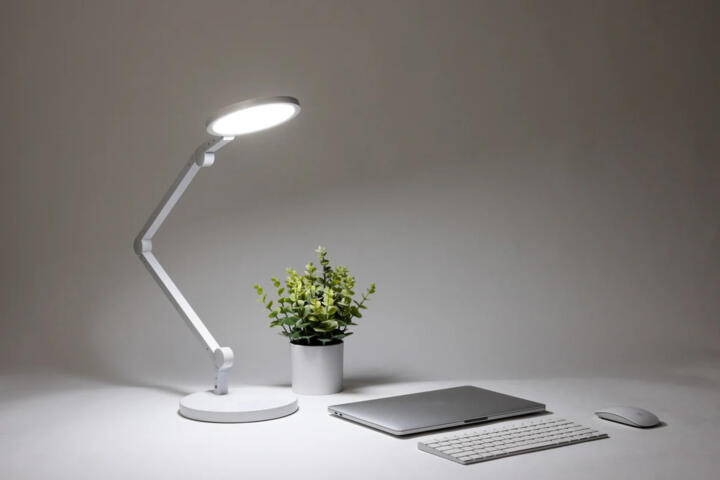
2700K Vs 4000K Light
Color temperature, measured in Kelvin (K), describes the tint of light from a lamp or LED: 2700K appears warm and yellowish, while 4000K appears neutral to slightly cool. Many fixtures also include a “white” label, but the K number is the part that stays consistent across brands. In daily routines, the practical difference shows up in perceived contrast, how skin tones look, and how alert you feel during tasks like reading or cooking. A kitchen set to 2700K often feels calmer, while a desk set to 4000K tends to look crisper for paperwork and screens. The same room can still feel different even with identical brightness because the spectral mix changes with K.
Color temperature alone does not determine biological effects. Brightness (often measured as illuminance in lux) and timing relative to your sleep schedule matter because light exposure drives circadian signaling through the retina. Two bulbs both labeled “2700K” can still differ in spectral power distribution, flicker behavior, and how much light they emit at eye level. If you want a routine that feels predictable, you need to treat K as one input, not the whole system. I once compared two LED bulbs with the same 2700K label and noticed one made printed text look slightly gray at the same lamp wattage—an example of why the lumens and optics matter.
Common Mistakes With K
People often treat 2700K and 4000K as if they map directly to “sleepy” and “awake.” That mapping works loosely for perception, but it breaks down when brightness changes or when light reaches the eyes at different angles. A 4000K lamp at low brightness can feel gentle, while a 2700K lamp at high brightness can still feel alerting. Another mistake is choosing a single color temperature for every room, then wondering why evenings feel harder to wind down. Rooms have different tasks, different surface colors, and different distances to the eyes, so one setting rarely fits all.
Supporting technologies also shape outcomes. LED drivers can introduce flicker at certain frequencies; flicker can affect comfort and visual performance, especially during desk work. Beam angle and diffuser design change how much light lands on your task area versus walls, which changes both perceived brightness and circadian exposure. Smart bulbs add another variable: some models support “tunable white,” but the actual spectral output at each K setting varies by manufacturer. Even the room’s wall color matters; light-colored walls reflect more light back into your eyes, which can make a “warm” lamp feel brighter than expected.
Finally, routines fail when people change the light but keep the same schedule. If you switch to 2700K at 7:00 p.m. but still use a bright screen at full brightness, the light exposure pattern stays similar. If you want a measurable change, you need to adjust both the lighting and the timing of other bright sources. This is where many plans stall—people adjust the bulb and forget the rest of the visual environment.
How To Choose For Routines
Match K To The Task
Use 4000K for tasks that benefit from crisp contrast and a “neutral” look: reading, sorting documents, cooking with detailed steps, and general daytime work. Use 2700K for relaxation-focused activities: dinner, low-key chores, and winding down in the last hour before sleep. A practical rule is to choose the color temperature that makes the task look comfortable without forcing you to squint or lean closer. If you wear glasses, check comfort at your usual reading distance; neutral light can reduce perceived glare for some people, while warm light can reduce perceived harshness for others.
For a quick test, set both bulbs in the same fixture type and measure the task area with a phone light meter app (many are imperfect, but they can show relative differences). If your desk ends up around 300–500 lux for reading, you can compare 2700K vs 4000K at the same approximate lux level. I tested this approach with a simple LED desk lamp and a lux app on Android (version 1.9.0 of one popular meter app from 2023) and found the “feel” changed even when the app’s lux readings stayed within a small range. The numbers from phone sensors are not lab-grade, yet the relative comparison can still guide a decision.
Control Brightness And Timing
Brightness and timing usually outweigh the K label for circadian effects. During the morning and daytime, higher illuminance supports alertness; in the evening, lower illuminance reduces the push toward wakefulness. If you cannot change the time you work, reduce the intensity of overhead lights and shift to lamps that light the room more gently. Many people do better with “dim and warm” rather than “warm but bright.”
Practical targets depend on your space and task, but you can aim for a noticeable drop in light levels after dinner. For example, use a dimmer to bring a living room from a bright overhead level down to a softer level for 60–90 minutes before sleep. If you use smart lighting, schedule a gradual transition rather than a sudden switch; abrupt changes can feel uncomfortable and may lead you to turn lights back up. A gradual ramp also helps you keep the room bright enough to move safely without turning on a harsh overhead.
Use Layered Lighting
Layering means combining ambient light with task light and accent light. Ambient light sets the overall brightness, task light supports the activity, and accent light adds comfort without flooding your eyes. With layered lighting, you can keep 4000K for the desk while using 2700K in the rest of the room. This reduces the “all-or-nothing” problem where one bulb choice forces every activity into the same mood.
Example setup: a 4000K lamp over your work area, plus a 2700K floor lamp in the corner for evening reading. Keep the brightest source near the task, not in your line of sight. If your lamp glare hits your eyes directly, you may feel more alert even at warm K, which defeats the wind-down goal. Adjusting lamp height and using a shade often changes comfort more than changing K.
Test With Your Own Sensory Feedback
Because spectral output and optics vary, treat K as a starting point and evaluate comfort. Look for signs like eye strain, headaches, or difficulty reading fine print after 30–60 minutes. If you notice glare or “washed-out” text, try lowering brightness or switching to a different beam angle rather than only changing K. If you use a monitor, match the room lighting to the screen brightness; a very bright 4000K room can increase perceived contrast and fatigue for some users.
For a structured test, change one variable at a time for 3–7 days. Day 1–3: keep brightness constant and compare 2700K vs 4000K in the same fixture. Day 4–7: keep K constant and adjust dimming levels in the evening. This method produces clearer conclusions than random switching, which often leads to “it feels different” without knowing why. It also helps you avoid chasing a moving target when your sleep schedule shifts for other reasons.
Case Examples For Everyday Homes
Scenario A: Home office with late meetings. A person works at a desk from 9:00 a.m. to 6:30 p.m., then does light admin at 8:00 p.m. They set the desk lamp to 4000K during work and switch the overhead lights to 2700K and dim them after dinner. The desk lamp remains off during the 8:00 p.m. admin block, replaced by a warm floor lamp at a lower brightness. After one week, they report less “wired” feeling at night, while daytime focus remains stable. The key change is not only K; it is the reduction in overall illuminance and the removal of bright light from the line of sight.
Scenario B: Kitchen and evening cooking. A household cooks dinner around 7:00 p.m. They use 2700K bulbs in the ceiling fixture for the evening, but they add a 4000K under-cabinet task light for chopping and reading recipes. During the meal, they turn off the task light and keep the warm overhead on low. This prevents the kitchen from looking “cool” during relaxation time while still supporting detailed tasks. The routine works because the bright, neutral light is confined to the task period and the rest of the room stays dimmer.
Quick Comparison Checklist
| Decision Point | 2700K Tends To Fit | 4000K Tends To Fit | What To Verify |
|---|---|---|---|
| Morning start | Comfortable if dim | Often better with higher brightness | Lux on the task area and screen glare |
| Desk work | Can feel cozy, may reduce crispness | Crisper for reading and paperwork | Avoid direct glare; use a shade |
| Evening wind-down | Warm and easier on mood | Use only if dim and task-limited | Dim level and time before sleep |
| Room-wide lighting | Often better for living spaces | Can feel harsh if too bright | Wall reflections and lamp placement |
Step-by-step checklist:
- Pick one room task to optimize first (desk work, cooking, or evening reading).
- Choose 4000K for the task period and 2700K for the relaxation period.
- Keep brightness constant during the first comparison so you can attribute changes to K.
- After 3–7 days, adjust dimming in the evening while keeping K fixed.
- Re-check comfort after 30–60 minutes of use; glare and eye strain often show up quickly.
- If you use smart bulbs, confirm the K setting you select matches the product’s labeled range and that the schedule ramps smoothly.
Common Mistakes To Avoid
Buying bulbs labeled 2700K or 4000K without checking lumens often leads to disappointment. A “warm” bulb that is brighter than your previous one can feel more alerting than expected. Another mistake is placing the brightest lamp at eye level; even warm light can cause discomfort and make it harder to relax. People also forget that ceiling fixtures spread light differently than table or floor lamps, so the same K can feel harsher with a wide beam.
Some households switch to 4000K for daytime and then keep it unchanged after dinner. That pattern can keep the room visually “active” and may worsen sleep onset for people who are sensitive to evening light. Others chase a single K setting while ignoring screen brightness and room contrast. If your monitor is bright and your room is dim, you may feel worse even with warm bulbs, because the visual system adapts to the brightest source. Finally, avoid rapid on-off cycles; flicker and abrupt changes can increase perceived strain, and dimmers vary in how smoothly they control LEDs.
FAQ
Is 2700K Better For Sleep?
2700K is often perceived as more relaxing, and it pairs well with lower evening brightness. Sleep effects depend on illuminance, timing, and other bright sources like screens, so the dimming level matters as much as the K label.
Does 4000K Make You More Alert?
4000K can feel more alerting because it appears neutral and crisp, especially at higher brightness. Alertness also depends on how much light reaches your eyes and whether it occurs earlier in your day.
Can I Use 4000K At Night?
Yes for short, task-limited activities if you keep brightness low and avoid direct glare. For wind-down periods, many people do better with 2700K plus dim lighting in the surrounding room.
What Should I Check On LED Bulbs?
Check lumens (brightness), beam angle or diffuser type, and whether the bulb is labeled for flicker performance. If you use smart bulbs, verify the tunable white range and scheduling behavior.
How Do I Compare Bulbs At Home?
Change one variable at a time: keep the same fixture and approximate brightness, then compare 2700K vs 4000K for 3–7 days. Use comfort feedback like eye strain and readability, not just mood.
Author's Insight
Color temperature affects perception through the balance of red, green, and blue components in the emitted light, which changes how surfaces and text look. Biological effects tied to circadian signaling depend on both spectrum and illuminance, so a “warm” lamp at high brightness can still feel activating. In practice, layered lighting and dimming schedules produce more consistent routines than choosing a single K for every activity. If you want evidence-based adjustments, treat K as one lever and measure or at least compare brightness levels at the task area. When symptoms like persistent headaches or severe sleep disruption occur, a clinician can help assess causes beyond lighting.
Key Takeaways
- 2700K usually supports evening comfort; 4000K usually supports daytime task clarity.
- Brightness and timing often matter more than the K label for circadian-related outcomes.
- Layered lighting lets you keep neutral light at the desk while keeping the rest of the room warm and dim.
- Compare bulbs by changing one variable at a time and track comfort and readability over several days.
- Check lumens, glare, and fixture placement; the same K can feel different across lamp designs.