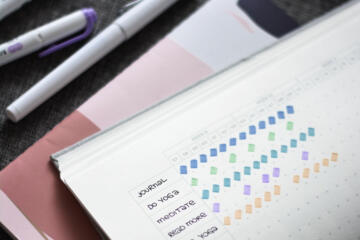
Track Your Success
Progress tracking works best when it answers one question: “Did my behavior move in the direction I care about?” A tracking system that tries to measure everything usually creates more decisions than it resolves. A low-overthinking approach uses a small set of signals, short time windows, and a review rhythm that matches how habits actually change.
For example, if your goal is better sleep, you can track two inputs and one output: bedtime, wake time, and a simple sleep quality rating. If your goal is daily movement, you can track minutes of walking and whether you completed your planned “minimum” session. If your goal is stress reduction, you can track a brief daily check-in like perceived stress from 1–5 and one behavior marker such as “did I do a 10-minute breathing session.” These measures are not perfect, but they are actionable.
Problems Or Pain Points
Overthinking often comes from treating tracking as a judgment tool instead of a feedback tool. When a metric becomes a score, missing a day feels like failure, and the mind starts negotiating with the plan. That mindset pushes people to either abandon tracking or inflate it with extra metrics to regain control.
Another common problem is metric hopping: switching measures every few days because the current one feels “wrong.” Habit change tends to show up as trends, not instant results. If you change the measurement too often, you lose the ability to tell whether the plan is working or the measurement is drifting. This is especially common with wearable data, where step counts, heart-rate estimates, and sleep staging can shift with device settings and sensor fit.
Tracking also depends on supporting technologies and routines. A phone app needs battery, notifications, and a consistent way to enter data. A wearable needs stable placement and charging habits. Even paper tracking depends on a place to write and a habit of reviewing. When any dependency breaks, the tracking record becomes incomplete, and the brain fills gaps with assumptions.
Finally, people often confuse “more data” with “more clarity.” Logging everything from food macros to mood adjectives can create a second job. You end up spending time reconciling numbers rather than deciding what to adjust. The result is a loop where tracking consumes the same energy you hoped it would save.
Solutions And Advice
Pick 2–4 Signals Only
Choose a small set of signals that connect directly to your goal. A practical rule is to track two behaviors and one outcome, or one behavior and one outcome if the goal is narrow. For sleep, behaviors might be bedtime and caffeine cutoff; the outcome might be a 1–5 sleep quality rating. For exercise, behaviors might be “minutes of walking” and “strength session completed,” with an outcome like resting heart rate trend if you already have a wearable.
Keep the definitions stable for at least 3–4 weeks. If you change what counts as “done,” you create a moving target. A version number can help you stay consistent; for instance, you might label your tracking sheet “v1.0” and only revise it after a month. This tiny habit prevents constant redefinition, which is where overthinking grows.
Use simple entry methods. If you dread typing, switch to quick taps, voice notes, or a single checkbox. I’ve seen people abandon tracking because the input step takes longer than the behavior itself, which is a design flaw in the system, not a personal flaw.
Set A Weekly Review Rule
Separate logging from interpretation. Log daily in under two minutes, then review once per week. A weekly review rule can be: “Every Sunday evening, check the last 7 days and decide one adjustment.” That decision limit prevents the “fix everything” impulse that often follows a bad day.
During review, look for direction and consistency, not perfection. If you aimed for 20 minutes of walking and you averaged 12 minutes but improved from 5 to 12 across the week, that trend matters. If you averaged 20 minutes but the pattern is erratic, you may need a plan that survives busy days. This approach uses the data to guide behavior, not to grade you.
Use a small decision template. Example: “If my average is below target, reduce the minimum next week; if my average is above target but quality is low, adjust timing.” You save time, reduce noise, and the inbox stops winning.
Use Ranges, Not Daily Judgments
Daily tracking should support range-based thinking. Instead of “I slept 6 hours so I failed,” use categories like “under 6,” “6–7,” and “7+,” then connect the category to what you can change. Sleep quality ratings work better when you treat them as a rough signal, not a diagnosis.
Ranges also help with mood and stress. A 1–5 stress rating is more useful when you track it as “typical level” and “spikes,” not as a daily verdict. If your stress rating jumps from 2 to 4 after late-night scrolling, you have a behavior link worth testing. If it jumps randomly, you may need to look at sleep duration, workload, or social factors.
When you use wearables, remember their limits. Many devices estimate sleep stages using motion and heart-rate signals; those estimates can shift with sensor fit and skin temperature. Treat wearable sleep staging as a trend indicator, not a ground truth.
Case Examples
Sleep Tracking Without Spiral
Scenario: A reader wants better sleep and starts tracking bedtime, wake time, and a 1–5 sleep quality rating. They log daily for two weeks and notice that sleep quality drops when bedtime shifts later by more than 60 minutes. Instead of changing the plan every night, they set a weekly rule: “If bedtime drift exceeds 60 minutes for 3 days, move bedtime earlier by 15 minutes next week.” After four weeks, they keep the same three signals and adjust only the bedtime target. The reader reports less mental debate because the system tells them what to change at the weekly level, not the nightly level.
Movement Goal With A Minimum
Scenario: Another reader aims to walk more but has unpredictable workdays. They track “minutes walked” and “strength session completed,” plus a weekly average of walking minutes. On days they cannot reach the full plan, they log the minimum: 10 minutes of walking. They review every Saturday and adjust the plan by changing the minimum rather than abandoning the goal. When travel disrupts the routine, the log still shows whether walking minutes stayed above the minimum. The reader avoids overthinking because the system measures consistency through a floor, not through perfect streaks.
Comparison Table Or Checklist
| Approach | Best For | Main Risk | What To Watch |
|---|---|---|---|
| 2–4 Signal Log | Goals with clear behaviors | Tracking becomes too vague | Definitions stay stable for 3–4 weeks |
| Weekly Review Rule | People who overreact to daily noise | Delaying action too long | One decision per week, not five |
| Range-Based Ratings | Mood, sleep, stress | Over-interpreting a single day | Look for patterns and spikes |
| Minimum Viable Log | Busy schedules and travel | Minimum becomes the only goal | Weekly review still checks direction |
Step-by-step checklist you can copy into your notes:
- Write your goal in one sentence that describes behavior, not feelings.
- Pick 2 behaviors and 1 outcome, or 1 behavior and 1 outcome.
- Define “done” in plain language and keep it unchanged for 3–4 weeks.
- Log daily in under two minutes using a quick entry method.
- Review weekly and choose one adjustment based on trend direction.
- Plan for missing data by recording the minimum you know.
Common Mistakes
People often track too many metrics at once, then feel overwhelmed when the numbers conflict. If sleep quality drops while walking minutes rise, the mind tries to solve a mystery every day. A smaller signal set reduces that conflict and makes weekly decisions more coherent.
Another mistake is using tracking to chase certainty. A single bad night, a single high-stress day, or a single low-step day rarely predicts the next week. When you treat each day as a verdict, you create stress about the tracking itself, which defeats the purpose.
Some readers also change targets too frequently. If you adjust the plan after every missed day, you never give the behavior a chance to stabilize. A better approach uses a review window and changes only one variable at a time, like bedtime timing or the walking minimum.
Wearables add a special failure mode: sensor drift and interpretation errors. If you notice sudden changes in sleep duration or resting heart rate, check whether the device was worn consistently and charged on schedule. Device firmware updates can change how metrics are computed; for example, a wearable might update sleep tracking behavior after a software update (I’ve seen this after version bumps like “v2.3.x,” though the exact details vary by model). Treat those shifts as a reason to review definitions, not a reason to panic.
Finally, people sometimes ignore the “why” behind the goal. Tracking without a clear behavior target turns into a diary of numbers. When the goal is behavior-based, the log becomes a tool for adjustment rather than a source of rumination.
FAQ
How Many Metrics Should I Track?
Track 2–4 signals that connect directly to your goal. If you track more, you usually spend time reconciling data instead of making weekly decisions.
What If I Miss Days Of Logging?
Use a minimum viable log. Record the outcome you know and leave the rest blank, then review trends weekly rather than judging missing entries as failure.
Should I Track Every Day Or Only Weekends?
Daily logging supports trend detection, but you can reduce friction by logging once per day at a consistent time. Weekly-only tracking works for some goals, yet it hides patterns that show up midweek.
Do Wearables Give Accurate Progress Data?
Wearables can show useful trends, but they estimate sleep stages and other metrics using sensors and algorithms. Treat wearable readings as directional signals and verify device fit and charging habits when results shift.
How Do I Stop Tracking From Becoming Stressful?
Separate logging from interpretation, set a weekly review rule, and cap decisions to one adjustment per week. Use ranges and categories so a single day does not trigger a plan overhaul.
Author's Insight
Smart progress tracking reduces decision load: it limits metrics, delays interpretation, and turns daily entries into weekly feedback. Evidence from behavior-change research consistently points to the role of self-monitoring, but the method matters; overly complex tracking often increases dropout and rumination. A practical system uses stable definitions, a short daily input step, and a review rhythm that matches how habits change over weeks. If your tracking repeatedly triggers anxiety or avoidance, the system design needs simplification before you add more data.
Key Takeaways
- Track a small set of signals tied to behavior, not a long list of numbers.
- Log daily with quick entry, then interpret weekly using trend direction.
- Use ranges and categories to avoid daily verdicts.
- Plan for missing data with a minimum viable log so the system stays usable.
- When wearable data shifts, check device consistency and definitions before changing your plan.