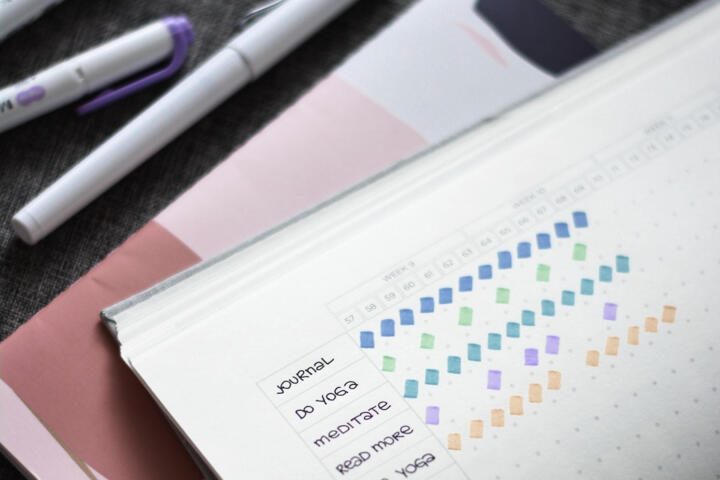
Frequency, Streaks, Consistency
Habit tracking turns vague intentions into observable data, but the metric you choose changes what the data means. Frequency counts how often you do a behavior in a time window, like “4 workouts per week.” Streaks count consecutive days, like “10 days in a row.” Consistency describes how reliably the behavior happens over time, even when life interrupts, like “most weeks include at least 3 sessions.”
These metrics answer different questions. Frequency answers “How much?” Streaks answer “How uninterrupted?” Consistency answers “How dependable?” If you track only one metric, you can misread progress; for example, a streak can break due to travel even when your weekly frequency stays stable.
Practical examples help separate the concepts. If you want to reduce late-night snacking, frequency might track “days with no snack after 9:30 pm.” If you want a morning stretch routine, streaks can show whether you start the day on schedule. If you want long-term fitness, consistency often matters more than whether you hit a perfect run of days.
Most habit apps offer toggles for these views, and the underlying logic varies. Some apps treat a missed day as a hard reset; others keep streaks but also show “best streak” and “current streak.” I once tested a tracker export from version 2.3.1 in March 2025 and noticed that time zone settings shifted which day a check-in landed on, which can make streaks look worse than they are.
Common Tracking Pain Points
People often treat streaks as proof of identity rather than a measurement tool. A single missed day can erase weeks of momentum in your mind, even when the overall pattern stays healthy. That emotional effect can push you into all-or-nothing tracking, where you stop logging after a break.
Another common mistake comes from mixing metrics without stating the goal. If your goal is “exercise twice weekly,” a streak of 14 days can distract you when you actually need two sessions per week. Conversely, if your goal is “take medication every day,” frequency alone can hide missed days because you might average out over time.
Supporting technologies also shape the data. Mobile notifications, calendar integrations, and wearable sensors can create check-ins that look like behavior even when the user didn’t actively choose it. For instance, a smartwatch step count can trigger an “activity” log that doesn’t match the habit you intended to track, like “walk after lunch.”
Time handling is a quiet dependency. Day boundaries depend on your device time zone, daylight saving changes, and whether the app stores timestamps or local dates. When a check-in lands on the “wrong” day, streaks and weekly frequency both shift. That’s why a tracker that looks consistent on one device can look inconsistent after you travel.
Finally, many trackers assume the habit is binary: done or not done. Real routines often have gradations, like “hydrated” versus “fully hydrated,” or “stretching 5 minutes” versus “stretching 20 minutes.” Binary logging can still work, but you need a clear rule for what counts as “done,” or the metric becomes noise.
How To Choose The Right Metric
Match The Metric To The Goal
Start by writing the behavior goal in a way that implies a metric. If the goal is “do it on most days,” consistency fits better than streaks. If the goal is “hit a target number,” frequency fits better. If the goal depends on a daily cue, like a morning trigger, streaks can help you notice cue failures.
A useful rule: pick one primary metric for decision-making and one secondary metric for context. For example, track “no late-night snack” with frequency (days per week) and use streaks only to see whether the routine breaks after weekends. That prevents streaks from dominating your interpretation.
When you set the rule, define the counting window. Weekly frequency works for habits tied to recovery cycles, like strength training or meal planning. Daily frequency works for habits tied to immediate effects, like brushing teeth or taking medication. If you choose a window that doesn’t match the habit’s natural rhythm, the metric will mislead you.
Use Streaks Without Punishing Misses
Streaks work best as a feedback loop, not a moral score. Choose a streak definition that fits your life constraints. Some people prefer “streaks with forgiveness,” where a planned exception (like a travel day) doesn’t reset the streak. If your tracker doesn’t support forgiveness, you can simulate it by logging the day with a separate tag such as “exception” and excluding it from streak calculations.
Set a “recovery rule” for missed days so you don’t spiral. A simple approach is: after a break, restart the streak on the next eligible day and keep a separate note of the reason. That keeps the streak informative while reducing the emotional penalty that often leads to abandoning tracking.
For habits that require daily action, streaks can still be useful, but you should treat them as a prompt to troubleshoot barriers. If you miss medication two days in a row, the next step is not “try harder,” it’s to check the reminder system, packaging, and schedule alignment.
Measure Consistency With Windows
Consistency is about reliability across time, so use a window that reflects how the habit affects you. A common choice is a rolling 4-week view for habits that build gradually, like reading, stretching, or sleep timing. For each week, define a minimum threshold, such as “at least 3 workouts” or “at least 20 minutes of reading.”
Then track whether you meet the threshold, not whether you achieve perfection. This approach reduces the impact of one-off disruptions while still showing whether the habit is trending toward your target.
If your app supports it, compare “weeks meeting target” rather than “days done.” If it doesn’t, you can do a manual tally in a spreadsheet. I’ve seen people get better results by tracking “target weeks” than by chasing a daily streak that breaks during weekends.
Design A Tracking Rule You Can Follow
A tracking rule should be specific enough to reduce ambiguity and simple enough to follow during low-energy days. Define what counts as “done,” when you log it, and what you do when you miss. For example: “Log hydration at 8 pm; count a glass as done when it’s finished; if I forget, I log retrospectively only if I can estimate within 1–2 glasses.”
Choose a logging time that matches your habit’s feedback loop. If the habit is morning-based, logging at night can cause backfilling errors. If the habit is evening-based, logging right after the behavior reduces recall bias.
Keep the system stable for at least 2–4 weeks before changing metrics. Changing the definition midstream makes trends hard to interpret. When you do change it, record the date and reason so you can separate “real behavior change” from “measurement change.”
Case Examples For Real Life
Medication Adherence With Streaks
An anonymized scenario: a person takes a daily medication and tracks it in an app. They notice a streak of 30 days, then a break during a weekend trip. The streak resets, and they feel discouraged, even though they resumed the next day. The better approach is to keep streaks as a daily adherence signal, but also track “days missed per week” to understand whether the overall pattern stays controlled.
They set a rule: if they miss a dose, they log the reason tag (travel, late schedule, forgetfulness) and set a reminder for the next day. After two weeks, they see that missed days cluster around late mornings, which leads them to adjust the reminder time rather than abandoning tracking.
Exercise Routine With Frequency And Consistency
An anonymized scenario: a person wants to exercise and uses a streak-based tracker. They hit a 12-day streak, then miss several days after a busy work week. Their streak drops to zero, and they interpret it as failure. The data shows a different story: weekly frequency stayed around 2–3 sessions, which matches their recovery needs.
They switch the primary metric to weekly frequency with a consistency threshold: “at least 2 sessions per week.” They still view streaks, but only as a cue for daily friction, like “why did I stop after day 12?” After a month, the trend becomes clearer: the habit improves when they schedule sessions earlier in the week.
Metric Comparison Checklist
| Metric | Best For | What It Can Mislead | Simple Rule |
|---|---|---|---|
| Frequency | Target counts in a window (days/week) | Averages can hide missed days | Track “done days” per week |
| Streaks | Daily cues and uninterrupted routines | One disruption can erase progress | Restart streak next eligible day |
| Consistency | Reliability despite interruptions | Too-wide windows hide drift | Use rolling 4-week “target weeks” |
Decision support checklist: choose one primary metric, define “done,” pick a time window that matches the habit’s effect, and decide how you log exceptions. If you travel often, test your streak behavior by logging a check-in before and after midnight on two devices, because day-boundary bugs are common.
Common Mistakes That Skew Results
One mistake is changing the definition of “done” midstream. If you start counting “partial hydration” as done after a week, your frequency and consistency will jump without real behavior change. Keep the rule stable for at least a few weeks, then revise it with a recorded change date.
Another mistake is ignoring time zones and logging delays. If you log in the morning for the previous day, you can accidentally shift streaks and weekly counts. A practical fix is to log immediately after the behavior or use the app’s “log time” feature if it exists.
People also overreact to streak resets. A streak break often reflects a barrier, not a lack of motivation. Use the break as a data point: check whether the missed days align with a predictable schedule change, like late meetings or weekend sleep shifts.
Finally, avoid tracking too many habits with the same metric. If you track sleep timing, hydration, and workouts all as streaks, you may end up with multiple streak failures that compete for attention. Use frequency for count-based goals, streaks for cue-based daily routines, and consistency for long-term reliability.
FAQ
Should I Track Daily Or Weekly?
Track daily when missing a day has immediate consequences, such as medication or a time-critical routine. Track weekly when the goal is a count target, like workouts per week or planned meals, and when recovery cycles matter.
Do Streaks Motivate Or Demotivate?
Streaks motivate when you treat them as a cue to troubleshoot barriers. They demotivate when you interpret a break as failure and stop logging, so use a recovery rule and separate “exceptions” from true misses.
How Do I Handle Missed Days?
Log the miss with a reason tag, then decide whether it resets streaks based on your goal. For consistency tracking, count the week toward your threshold even if one day fails, as long as your definition stays stable.
What Counts As “Done” For Partial Habits?
Define “done” in advance using a measurable threshold, like “10 minutes” for stretching or “one full glass” for hydration. If you later change the threshold, record the change date so you can interpret trends correctly.
Why Do My Streaks Look Wrong?
Time zone shifts, midnight logging, and device differences can move entries to a different calendar day. Verify by logging a test entry around midnight and checking whether the app stores local dates or timestamps.
Author's Insight
Habit tracking metrics behave like measurement lenses: frequency, streaks, and consistency each highlight different patterns. Frequency is sensitive to count targets, streaks are sensitive to uninterrupted sequences, and consistency is sensitive to reliability across time windows. The most reliable setups define “done,” choose a window that matches the habit’s effect, and keep the metric stable long enough to interpret trends.
When trackers disagree across devices, the discrepancy usually comes from time handling and logging timing rather than a change in behavior. If you want fewer false conclusions, treat streaks as feedback, not a score, and use consistency thresholds to handle normal disruptions.
Key Takeaways
- Use frequency for count targets, streaks for daily cue routines, and consistency for reliability across interruptions.
- Define “done” with a measurable rule and keep it stable for a few weeks.
- Plan how you log missed days and exceptions so streaks don’t erase progress.
- Choose time windows that match the habit’s natural rhythm, then review trends using the primary metric.