Topic Introduction
“Tiny daily choices” refers to actions so small you can repeat them even on low-energy days: a 10-minute walk after meals, a consistent bedtime window, a glass of water before coffee, or a brief meal-planning step. The long-term results come from repetition plus timing, not from any single day’s effort.
Consider sleep timing. If you keep wake time within about 30–60 minutes most days, many people experience more stable sleep pressure and easier bedtimes. If you shift wake time by several hours on weekends, the body clock often has to re-adjust, and the next week’s sleep quality can wobble. That wobble can then affect appetite regulation, cravings, and energy for movement.
Movement works similarly. A 10-minute walk after dinner can reduce post-meal glucose spikes for some people, and it also creates a cue that makes later activity more likely. When you repeat that cue daily, you build a pattern your body and schedule start to expect.
Food choices can be tiny and still meaningful. Swapping one snack for a higher-fiber option, adding a serving of vegetables to lunch, or eating more slowly by setting a 15–20 minute timer changes the pace of eating and satiety signals. Those changes rarely feel dramatic in a single day, which is why tracking matters.
Main Problems Or Pain Points
People often treat habits like moral tests instead of systems. They aim for perfect days, then abandon the plan after one missed workout or one late night. The result is a cycle of restart fatigue: the habit never gets enough repetitions to become automatic.
Another common mistake is confusing intensity with consistency. A plan that requires 60 minutes of exercise daily fails more often than a plan that asks for 10–20 minutes most days. The body adapts to the pattern, and the pattern is what you can sustain.
Dependencies matter, and many plans ignore them. Sleep depends on light exposure, caffeine timing, room temperature, and stress load. Food choices depend on shopping routines, meal prep time, and what is available at home. Movement depends on footwear, safe routes, and whether the day’s schedule leaves a predictable window.
Supporting technologies can help, but they also create failure modes. Wearables that track steps or heart rate can motivate some people, yet they can also encourage “numbers chasing” that crowds out rest. A calorie app can be useful for awareness, but it can also distort behavior when entries are inaccurate or when the user reacts to daily fluctuations.
Even medication routines have dependencies. Missed doses can happen when refills run out, when schedules change, or when side effects make adherence harder. In those cases, the “habit” is not just willpower; it is the logistics around the medication.
One more pain point: measurement that is too vague. “I’m doing better” does not tell you whether sleep timing improved, whether meals became more consistent, or whether stress recovery actually happened. Without a few concrete metrics, you can’t tell whether the tiny choices are compounding or stalling.
Solutions And Advice
Pick One Habit Loop
Choose a single behavior that has a clear cue and a repeatable trigger. A habit loop needs a cue you can predict: after brushing teeth, after lunch, after turning off the kitchen lights, or at a specific time. Then define a minimum version you can do even on bad days.
Example: “After dinner, I walk for 10 minutes” becomes “After dinner, I walk for 10 minutes, or I do 2 minutes of brisk walking if I’m exhausted.” That “or” clause prevents all-or-nothing behavior. I’ve seen people set this up in a notes app with a recurring reminder; in practice, the reminder becomes the cue when motivation drops.
Track the loop for 14 days. If you miss more than half the days, adjust the cue or reduce the minimum. Habit formation is less about perfect willpower and more about matching the plan to your real schedule.
Use Realistic Metrics
Pick 2–3 metrics that connect to health outcomes and are easy to observe. Sleep timing can be measured as wake time consistency. Movement can be measured as minutes of walking after meals or total steps, depending on what you can sustain. Food can be measured as “vegetable servings at lunch” or “fiber grams” if you already track, but simpler counts often work better.
For sleep, a practical target is keeping wake time within a 60-minute window most days. For movement, a realistic starting point is 10–20 minutes of walking daily, with a focus on after-meal walks if glucose control is a concern. For food, aim for one change you can repeat: add one extra serving of vegetables, or replace one snack with a higher-fiber option.
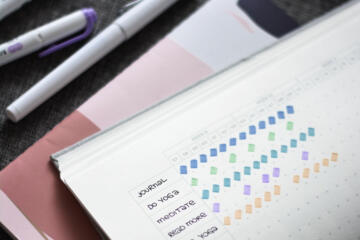
Tools can help. A common approach is using a spreadsheet or a habit tracker that records “done/not done” rather than detailed scoring. In my own workflow, I used a simple checklist in a calendar app (version noted: iOS Calendar build from 2024) because it reduced decision fatigue. The key is that the metric should not require constant data entry.
Design For Low-Energy Days
Plan a “minimum viable day” so you never start from zero. Low-energy days are predictable; your plan should reflect that. Write down three minimum actions: one for movement, one for food, and one for stress recovery.
Movement minimum might be 5 minutes of walking plus stretching. Food minimum might be “one balanced meal” using a template: protein + fiber + color (vegetables or fruit). Stress minimum might be a 2-minute breathing session or a short wind-down routine.
This approach works because it preserves the habit streak without demanding the same effort every day. You still get repetition, and repetition is what drives compounding changes in behavior.
Make Medication And Appointments Habit-Friendly
If you take medication, treat adherence as a daily system. Set refill alerts before the bottle runs out, keep a spare dose plan for travel, and link the dose to an existing routine like brushing teeth or breakfast. If side effects interfere, record them and discuss adjustments with a clinician rather than stopping abruptly.
For appointments, use a calendar rule: schedule the next check-in before leaving the current one when possible. Many people miss follow-ups because the plan exists only in memory. A calendar entry with a reminder 2–3 weeks before the due date reduces that risk.
When tracking symptoms, keep it factual: timing, severity, triggers, and what you tried. This helps clinicians interpret patterns without relying on memory.
Case Examples
After-Dinner Walk Pattern
An anonymized scenario: a person with a busy schedule wanted better energy after meals. They started with a 10-minute walk after dinner on weekdays only, then added weekends once the weekday pattern stabilized. They tracked wake time consistency and the number of after-dinner walks for 30 days.
After two weeks, they noticed fewer late-night cravings and less “snack grazing” after dinner. The change did not come from longer workouts; it came from a predictable post-meal cue that reduced idle time and increased satiety. When they missed a walk, they still did a 2-minute brisk walk to keep the cue alive.
Sleep Timing With Weekend Limits
An anonymized scenario: a person struggled with falling asleep and relied on late weekend mornings. They kept wake time within 90 minutes on weekends and used dim lighting in the last hour before bed. They also moved caffeine earlier by 2–3 hours and wrote down bedtime attempts for two weeks.
Sleep onset improved gradually rather than instantly. The biggest shift came from reducing wake-time drift and caffeine timing, which lowered the “catch-up” effect that often ruins Monday mornings. They stopped chasing perfect bedtime and focused on consistent wake time and a short wind-down routine.
Comparison Table Or Checklist
| Goal | Tiny Daily Choice | How To Track | Realistic Timeframe |
|---|---|---|---|
| More stable sleep | Keep wake time within ~60 minutes | Wake time log (daily) | 1–3 weeks for noticeable change |
| Better post-meal energy | 10-minute walk after dinner | After-dinner walk count | 2–4 weeks for pattern effects |
| Fewer snack spirals | Add fiber at lunch | Vegetable/fiber servings count | 1–2 weeks for cravings feedback |
| Lower stress at night | 2-minute paced breathing | Done/not done before bed | Days to 2 weeks |
Step-by-step checklist for starting a tiny habit plan:
- Write the habit in one line with a cue: “After X, I do Y for Z minutes.”
- Define a minimum version for low-energy days.
- Choose one tracking method that takes under 30 seconds per day.
- Run the plan for 14 days without changing the goal.
- Adjust only the cue or minimum if you miss more than half the days.
- After 14 days, add one new habit only if the first one is stable.
Common Mistakes
People often start with a habit that is too large to repeat. A plan that requires 45 minutes of exercise daily fails because it ignores schedule variability. Start smaller than you think you need, then scale after the pattern holds.
Another mistake is changing multiple variables at once. If you adjust sleep timing, diet, and exercise in the same week, you can’t tell which change helped. Tiny habits compound through feedback, and feedback requires stable conditions long enough to observe effects.
Some readers over-trust wearable metrics. Step counts can drop due to device placement, and heart rate readings can vary with skin contact and movement. Treat numbers as signals, not verdicts, and compare them to how you feel and what you can observe.
Tracking can also become a trap. Logging every meal and every symptom can increase stress and reduce adherence. If tracking makes you anxious, switch to fewer metrics that match your goal.
Finally, people sometimes ignore medication and safety constraints. If a habit plan involves reducing medication, changing dose timing, or stopping a prescription, that decision requires clinician guidance. A tiny habit can support adherence, but it cannot replace medical instructions.
FAQ
How Long Do Tiny Habits Take?
Many people notice pattern-level changes within 1–3 weeks, especially for sleep timing and after-meal walking. Larger physical changes often take longer, but the first sign is usually improved consistency, not a dramatic transformation.
What If I Miss a Day?
Resume the habit at the next cue and use the minimum version if needed. Missing one day breaks streaks, but it does not erase the repetitions already built; the plan’s job is to prevent a restart cycle.
Should I Track Calories Or Steps?
Track what connects to your goal and is easy to repeat. For movement, steps or minutes can work; for food, fiber servings or meal templates often reduce error compared with precise calorie counting.
Can Breathing Exercises Replace Sleep Hygiene?
Breathing can support relaxation, but sleep hygiene addresses timing, light, caffeine, and environment. A combined approach usually works better than relying on one technique.
How Do I Choose The Right Habit?
Pick a habit with a predictable cue and a minimum version you can do on low-energy days. If you can’t name the cue or the minimum, the habit will likely stall when motivation drops.
Author's Insight
Tiny daily choices compound through repetition, cue stability, and feedback loops. Evidence across sleep, physical activity, and nutrition consistently points to timing and consistency as drivers of measurable changes, even when individual effect sizes vary. The most reliable habit plans reduce decision load, define minimum actions, and track a small set of observable metrics. When health conditions or medications are involved, behavior changes should complement clinician guidance rather than replace it.
Key Takeaways
- Choose one tiny habit with a clear cue and a minimum version for bad days.
- Track 2–3 simple metrics that reflect your goal, not every detail.
- Keep conditions stable for about 14 days so you can learn what actually works.
- Use wearables and apps as signals, and avoid turning numbers into stress.
- For medication-related changes, follow clinician instructions and focus on adherence systems.