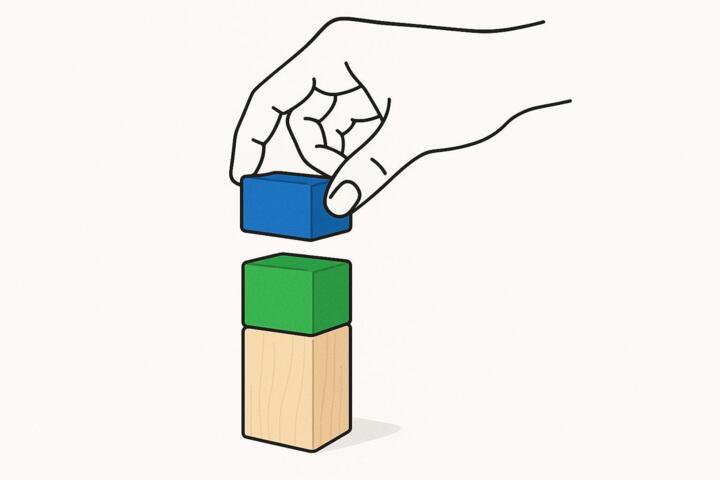
When Habit Stacking Overloads
Habit stacking works best when the new behavior rides on a stable cue, like brushing teeth or starting the coffee maker. The trouble starts when you treat “one more habit” as a low-cost add-on, even though each new behavior adds planning, attention, and friction. A stack of five small habits can still feel heavy if they all require the same time window or the same mental state. In practice, people often discover that the cue is stable, but the capacity to act on it is not.
Consider a common setup: “After I get dressed, I stretch,” “after I brush, I floss,” “after breakfast, I journal,” “after work, I plan tomorrow,” and “before bed, I read.” Each item sounds manageable alone. Together, they compete for the same minutes, the same transitions, and the same energy. When one habit slips, the rest can wobble because the sequence depends on you being fully “in motion.”
Stacking also changes your identity narrative. If you track every miss, your brain learns to expect failure, which can reduce follow-through the next day. I’ve seen this pattern show up in habit trackers where streaks reset quickly; the app becomes a scoreboard rather than a feedback tool, and that shift matters.
Why People Stack Too Much
Many habit plans fail because they confuse a cue with a guarantee. A cue like “after brushing teeth” is only useful if you still have the materials, the time, and the motivation to act right then. If floss is in a drawer across the bathroom, the cue becomes a mini task, and the stack starts to demand extra steps.
Another pain point is hidden dependency. Sleep quality, stress level, and workload change your ability to follow through, even when the routine stays the same. If you add journaling during a week of poor sleep, you may interpret the slip as a character flaw rather than a capacity mismatch. Habit stacking can also collide with existing routines, like commuting schedules or family needs, which shift the timing of your cues.
People also overestimate how many “micro-actions” fit into a day. A habit that takes two minutes can still cost five minutes when you include setup, cleanup, and switching attention. The switch cost is easy to miss because it doesn’t show up in the habit’s time estimate. On a spreadsheet, it looks tidy; in real life, it feels messy.
Some plans rely on tracking as the main behavior. That creates a loop where you spend energy logging instead of doing. If your tracker requires manual entries, you may skip the habit and remember later, which turns the system into a retrospective record rather than a real-time guide. I once tested a workflow using Habitica version 2.0.3 for a month; the “check-in” habit became the only one I reliably completed.
Solutions And Advice For A Lean Stack
Audit Your Current Cues
Start by listing each habit in your stack and writing the exact cue phrase you use, such as “after I brush my teeth” or “after I close my laptop.” Then add two columns: “materials within arm’s reach” and “time window is realistic.” If either column is false, the cue is not doing its job. Move the materials closer or change the cue to something more stable, like “after I turn off the bathroom light.”
A practical target is to keep at least 80% of your cues “friction-light” for a week. If you cannot reach that, reduce the number of habits rather than trying to brute-force the cue. A lean stack often means fewer habits, but each one has a clear trigger and a short action.
Limit Additions To One Change
When stacking becomes too much, the fix is to stop stacking for a short period. Choose one habit to keep and one habit to add, or keep your current stack and remove one habit for seven to fourteen days. This creates a controlled experiment where you can tell what helped and what hurt.
Use a simple rule: if you add a habit, you do not add a new tracking rule at the same time. Tracking changes can mask the effect of the behavior change. If you want numbers, review completion rate rather than streak length; streaks often punish normal variability.
For many people, a realistic outcome for a new habit is 4–6 successful days per week during the first two weeks, assuming the habit takes under five minutes. If you consistently land below that, the habit is too demanding for the cue you chose.
Design For “If-Then” Recovery
Plan what happens when the cue fails. Write an if-then rule such as “If I miss floss after brushing, I floss after I wash my hands next.” Recovery rules prevent the “I already messed up” spiral that breaks stacks.
Keep recovery actions small. If you miss a habit that normally takes two minutes, do not replace it with a ten-minute catch-up. Catch-up tasks often become the reason people abandon the whole stack. A mild frustration is common here—people want to “make it right,” and that urge can backfire.
Track recovery separately for one week. A simple log like “missed cue / did recovery” helps you see whether the system is resilient or brittle.
Match Habits To Energy Windows
Assign habits to the times you actually have capacity. If you journal at night after a long day, the habit competes with fatigue and screen time. Try moving it earlier, or shorten it to a single prompt like “What’s one thing I’m grateful for?”
Energy windows can be inferred from your routine, not from willpower. If you reliably cook dinner at 6:30 p.m., that’s a stable anchor. If you reliably feel sharp at 9:00 a.m., that’s a better time for effortful habits. This is not about optimizing your life; it’s about aligning the habit with the reality of your day.
As a side observation, I’ve seen people improve follow-through by switching from “before bed” to “after brushing teeth,” because brushing teeth happens even on chaotic nights. The cue is less negotiable than the mood.
Case Examples Of Habit Overload
Example 1: The Morning Stack
An anonymized person starts with three morning habits: stretch, water, and a short plan. After two weeks, they add floss and a five-minute reading session. By week four, they miss floss most days and skip stretching when they run late. The cue “after brushing” is stable, but the bathroom routine gets rushed, and the materials are not always ready.
The fix is not a motivational speech. They move floss to a visible spot next to the toothbrush, shorten stretching to one minute, and remove the reading habit for two weeks. Their completion rate rises because the stack stops competing for the same rushed minutes.
Example 2: The Workday Sequence
An anonymized remote worker stacks: start-of-day task list, mid-day break, and end-of-day shutdown checklist. During a busy project week, meetings expand and the worker starts skipping the shutdown checklist. The next day begins with a messy desk and open tabs, which increases friction for the start-of-day list.
They add an if-then recovery: “If I forget shutdown, I do the checklist at the next break.” They also reduce the shutdown checklist from eight items to three. The stack becomes less fragile because the recovery path exists and the action is short enough to fit the break.
Decision Checklist For Stacking
| Habit Stack Check | Green | Yellow | Red |
|---|---|---|---|
| Cue clarity | Exact trigger phrase | Trigger is vague (“later”) | Trigger depends on mood |
| Friction | Materials ready within reach | You sometimes hunt for items | You often need extra steps |
| Time fit | Action under 5 minutes | Action 5–10 minutes | Action over 10 minutes daily |
| Recovery plan | If-then rule exists | Recovery is improvised | No plan after a miss |
If you see more than one Red item, reduce the stack size before adding anything new. If you see Yellow items, you can keep the habits but tighten the cue and shorten the action.
Step-by-step for the next 7 days: choose one habit to protect, remove one habit from the stack, adjust materials for the protected habit, write one if-then recovery rule, and review completion rate at the same time each day. The goal is stability, not a perfect streak.
Common Mistakes That Break Stacks
One mistake is using the same cue for multiple habits without checking timing. If two habits require the same moment, you create a bottleneck. People then interpret the bottleneck as “lack of discipline,” when the system simply lacks capacity.
Another mistake is making the habit too big for the cue. A cue that triggers a two-minute action cannot reliably trigger a twenty-minute session. When the habit grows, the cue becomes a suggestion rather than a trigger, and the stack starts to drift.
Some people also change the habit definition midstream. They start with flossing, then add “also check for bleeding,” then add “also use mouthwash,” and the action expands. That expansion can be reasonable for dental care, but it breaks the habit experiment because the target keeps moving.
Finally, many plans treat tracking as proof of progress. If the tracker shows “done” but the behavior is inconsistent, the data becomes unreliable. A better approach is to track completion with a simple rule and review patterns, not to chase streaks that reset after one missed day.
FAQ
How Many Habits Can I Stack?
Start with a small stack you can complete on most days, then add one habit only after your completion rate stays stable for about two weeks. If you cannot keep most habits on track, reduce the number of habits rather than adding more structure.
What If I Miss A Cue?
Use an if-then recovery rule tied to the next realistic moment, like “after I wash my hands” or “during the next break.” Avoid catch-up sessions that take much longer than the original habit.
Should I Use A Habit Tracker?
A tracker helps when it records completion consistently and supports review. Manual trackers with frequent check-ins can become a new task, so choose a method that matches your routine and review cadence.
Can Stress Make Habit Stacking Fail?
Stress changes attention, energy, and time, which affects follow-through even when cues stay the same. When stress rises, reduce the stack or shorten the habits so the cue still leads to action.
How Do I Know My Stack Is Too Much?
Watch for repeated misses clustered around the same time window, missing materials, or a pattern where one skipped habit causes others to slip. Those signs point to cue friction or capacity limits.
Author's Insight
Habit stacking is a behavior design method that depends on stable cues and low friction, not on willpower. When stacks fail, the failure usually comes from cue ambiguity, competing time windows, or missing recovery rules. Evidence from behavior science supports using small, measurable actions and adjusting the environment to reduce friction, which aligns with the practical advice in this article. If you want a health-adjacent habit plan, keep the behavior definition stable long enough to learn what works, then adjust based on your observed completion patterns.
Key Takeaways
- Stacking breaks when multiple habits compete for the same cue window or when capacity drops due to stress or fatigue.
- Audit cues for clarity, materials, and time fit before adding more habits.
- Protect one habit, remove one habit for a short test period, and add only one change at a time.
- Write if-then recovery rules so a missed cue does not collapse the whole sequence.