Bedroom Sleep Basics
A restful bedroom is less about buying new gear and more about controlling a few repeatable inputs: light at night, sound levels, room temperature, airflow and odors, and the way your bed signals “sleep” instead of “work.” Sleep researchers often describe sleep as a balance between circadian timing (your body clock) and sleep pressure (how strongly your body wants rest). Bedroom tweaks mainly influence the circadian and arousal side of that balance.
Start with a simple observation: many people feel “tired but wired” after lying down with bright LEDs, a phone on the pillow, or a room that runs warm. If you keep a notebook for 7 nights, you can usually spot patterns like “worse sleep on nights with the hallway light on” or “more wake-ups when the room is above a certain temperature.” On my own desk, I use a basic timer app (iOS version 17.5.1) to log bedtime and wake time because it reduces the temptation to rewrite the story later.
Practical examples: use blackout curtains or a sleep mask when streetlights reach the bed; place a fan to smooth intermittent noise; keep the thermostat set so you do not feel overheated under the covers. Bedding matters too: a fitted sheet that holds position and a comforter that matches your typical temperature swings reduce micro-adjustments that fragment sleep.
Main Bedroom Pain Points
People often treat sleep as a single problem, then change one thing and hope for a full fix. Sleep usually responds to a bundle of small changes, and the “bundle” differs by person. A room that is quiet but too bright can still raise alertness, and a dark room with warm air can still trigger frequent awakenings.
Light is a common culprit. Even low-level light from LEDs, charging stations, or a TV glow can suppress melatonin and shift circadian signaling. The effect depends on brightness, distance, and whether the light reaches your eyes; a nightlight across the room can matter more than a dim lamp behind you. If you use a smart alarm clock, check its default brightness mode; many clocks keep a bright display during the night unless you change the setting.
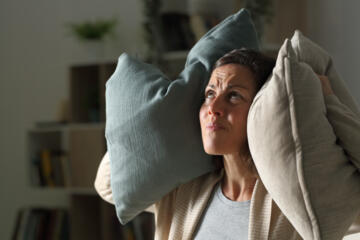
Noise is another dependency. Sleep is disrupted more by sudden sounds than by steady background noise, so a fan or white-noise device can help by masking peaks. Sound transmission also depends on building materials and where the bed sits relative to shared walls. If you live in an apartment, the “same decibel” can still feel different because of frequency content and timing.
Temperature and airflow interact with bedding. Many people run their rooms too warm because they feel comfortable sitting, then feel overheated once they are under a blanket for hours. Humidity and odors also play a role: dry air can irritate nasal passages, and strong scents can trigger arousal in sensitive sleepers. Air quality matters too, but bedroom tweaks should stay realistic; a HEPA air purifier can reduce particulate exposure, while “freshening sprays” often add irritants.
Solutions And Advice
Control Light And Screens
Dim the bedroom 60–90 minutes before bed. Use warm, low-brightness lighting in the room where you wind down, and cover or relocate LEDs that face the bed. If you need a phone for reading, switch to a dark theme and reduce brightness; then place the phone face-down and out of direct line-of-sight. A sleep mask works as a “last-mile” fix when curtains do not fully block streetlights.
For testing, pick one variable: either cover the LEDs or use a mask, then keep everything else stable for 7 nights. Track wake-ups and time-to-sleep. If you use a smart display, confirm its “night mode” schedule; some devices follow local time but not your bedtime routine, which can be annoying when you go to bed early.
Manage Noise With Masking
Reduce peak noise first. Close windows when feasible, add door sweeps, and consider thick curtains if the noise is coming from outside. For indoor noise, a fan or a white-noise app can smooth intermittent sounds like footsteps or plumbing cycles. Keep the masking sound at a level that does not force you to raise your voice; if you find yourself turning it up repeatedly, the room likely needs physical noise reduction too.
Try a simple setup: place the fan so it does not blow directly into your face, then run it at a constant setting. If you use a white-noise device, set a timer for the first 4–6 hours so you do not keep it at full volume all night. On one evening in late spring, I noticed my own sleep improved when the noise stayed constant rather than “changing tracks” every few minutes.
Dial In Temperature And Bedding
Cooler sleep generally supports sleep continuity for many people. Aim for a room temperature where you feel slightly cool when you first get into bed, then becomes comfortable under your covers. If you wake up sweaty, lower the thermostat by 1–2°C (or adjust the fan speed) and reassess after a week. If you wake up chilled, switch to a different blanket weight rather than raising the room temperature.
Bedding tweaks can reduce micro-awakenings. Use breathable materials when you run warm, and keep sheets smooth so you do not feel bunching. If you share a bed, consider whether one person’s temperature preference drives the thermostat setting. A common compromise is a lighter top layer for the warmer sleeper and a separate blanket for the cooler sleeper.
Improve Air And Reduce Irritants
Keep the bedroom air neutral. Ventilate briefly in the evening or morning if outdoor air quality allows, then close windows at night if pollen or traffic noise is an issue. If odors trigger you, skip scented sprays and scented plug-ins; they can add volatile compounds that irritate airways. For allergies, a HEPA air purifier can help with airborne particles, but it works best when you place it near the bed and run it consistently on an appropriate fan setting.
Realistic expectations matter: air purifiers reduce particles, not all odors, and they do not replace cleaning. Wash bedding weekly in hot water when fabric allows, and vacuum with a HEPA-filter vacuum if dust is a known trigger. If you have asthma or strong sensitivities, check with your clinician about triggers and safe cleaning products.
Case Examples
Example 1: The LED problem. A couple in a small apartment reported frequent early awakenings. They kept the room dark with curtains, but a charging station LED and a TV standby light still faced the bed. After moving the charger behind a dresser and setting the TV to fully power off at night, they saw fewer wake-ups over 7 nights. The change did not “knock them out,” but it reduced the number of times they noticed light during the night.
Example 2: Noise peaks from a hallway. A student living in a shared building woke up after hallway footsteps and door slams. They tried lowering the volume of a fan but kept it too quiet to mask peaks. After raising the fan to a constant level and adding a door draft stopper, they reported fewer awakenings and less time spent checking the clock. They still heard occasional sounds, yet the sleep disruption dropped because the peaks became less distinct.
Comparison Checklist
| Tweak | What It Targets | How To Test | What To Expect |
|---|---|---|---|
| Blackout or mask | Night light exposure | Keep other factors stable for 7 nights | Fewer light-related awakenings |
| Fan or white noise | Noise peak masking | Use constant volume; avoid sudden changes | Less time spent re-settling |
| Temperature adjustment | Overheating or chill | Change by 1–2°C or adjust blanket weight | Fewer night sweats or cold wake-ups |
| HEPA purifier | Airborne particles | Run consistently; place near bed | Reduced allergy-trigger symptoms |
Step-by-step checklist (use one at a time):
- Pick one night problem to target: light, noise peaks, temperature, or irritants.
- Change only one variable for 7 nights so you can interpret results.
- Log bedtime, wake time, and the number of awakenings.
- Keep a consistent wake time even if sleep quality varies.
- If you improve, keep the change and stop adding new tweaks for a few days.
- If you do not improve, revert that tweak and test the next variable.
Common Mistakes
People often change multiple bedroom variables at once: curtains, thermostat, and a new mattress topper in the same week. That approach makes it hard to learn which factor mattered. Sleep improves slowly for many people, so you need a method to separate “real effect” from normal night-to-night variation.
Another mistake is relying on device settings without checking actual behavior. A phone’s “night shift” can still leave bright notifications, and a smart speaker can glow or beep during the night. If you use an alarm clock, confirm its display brightness and whether it dims after a set time.
Some people chase a perfect temperature by turning the thermostat up and down repeatedly. That can create drafts and discomfort that wake you. A more stable approach works better: adjust once, then evaluate over several nights.
Finally, scented products can backfire. Air fresheners and scented laundry additives can irritate airways for sensitive sleepers, which shows up as dry throat, congestion, or restlessness. If you suspect irritants, remove scents first and then test cleaning and ventilation changes.
FAQ
How dark should a bedroom be?
Keep the bed area as dark as possible. Cover LEDs and standby lights that face the bed, and use blackout curtains or a sleep mask when streetlights or window glow reach your eyes.
What noise level disrupts sleep?
Sleep disruption depends on sound peaks and frequency, not only decibels. Masking intermittent sounds with a fan or steady noise often helps more than chasing a single “target number.”
What room temperature helps most people?
Many sleepers do better when the room feels slightly cool at first and does not overheat under blankets. Adjust by small steps and evaluate over a week, since comfort varies by bedding and personal sensitivity.
Do air purifiers improve sleep?
They can help when airborne particles trigger symptoms like nasal congestion or allergies. They do not remove all odors, and they work best with consistent operation and correct placement near the bed.
Should I use white noise all night?
Some people sleep well with constant masking, while others find it irritating or notice it after long periods. A practical approach is a timer for the first half of the night, then reassess based on awakenings.
Author's Insight
Bedroom sleep improvements usually come from reducing arousal triggers: light exposure, sudden sounds, overheating, and airway irritation. The most reliable method is controlled testing—change one variable for about a week and track awakenings and time-to-sleep. Many “sleep hacks” fail because they change multiple factors at once or ignore how devices behave after you turn in. If symptoms include loud snoring, choking/gasping, or persistent daytime sleepiness, bedroom tweaks do not replace medical evaluation.
Key Takeaways
- Target one input at a time: light, noise peaks, temperature, or irritants.
- Use a 7-night log to interpret changes instead of relying on memory.
- Stabilize conditions (constant masking sound, stable temperature) rather than making repeated adjustments.
- Remove obvious irritants like scented products if you notice congestion or dry throat.
- Seek clinical help when sleep problems suggest sleep-disordered breathing or another medical cause.